


Dr. Jimmy / The Who from the Quadrophenia album 1973
Quadrophenia is the sixth studio album by the English rock band The Who, released as a double album in 1973. It is the group’s third rock operar, the previous two being the “mini-opera” song “A Quick One, While He’s Away” (1966) and the album Tommy (1969). Set in London and Brighton in 1965, the story follows a young mod named Jimmy and his search for self-worth and importance. Quadrophenia is the only Who album entirely written by Pete Townsend.


Petet Townsend in 1972
Doctor Jimmy Review / Mark Deming in All Music
It’s hardly news that drug and alcohol abuse can have a profound effect on a person’s personality, and given that the Who rose to fame as one of the favorite bands of the Mods — a style-obsessed British youth subculture whose greatest obsession, past sharp clothes, fancy motor scooters, and cool music, would have to be amphetamines, which they called “leapers” — the members of the band had ample opportunity to witness this phenomenon up close. (They also had to look no further than their drummer, Keith Moon, whose own fondness for pills and alcohol led to any number of episodes which could be either hilarious or terrifying, depending on the day and the circumstances.)
“Doctor Jimmy,” which appears near the end of the Who’s 1973 album Quadrophenia, is clearly the tale of a young man whose darkest side rises to the surface under the influence. The album’s narrative follows Jimmy, a young Mod whose personality seems to have been split into four fragments, and in “Doctor Jimmy,” our protagonist is all but made of bravado, willing to fight anyone who gets cross with him, take any woman regardless of how she feels about him, and leave a trail of destruction in his path. As Jimmy curtly puts it, “What is it? I’ll take it/Who is she? I’ll rape it/Got a bet there? I’ll meet it/Getting high? You can’t beat it.” But he isn’t “Doctor Jimmy” all the time — as he puts it, “When I’m pilled, you don’t notice him/He only comes out when I drink my gin.”
While Quadrophenia makes it more than clear that drugs and booze are hardly Jimmy’s only problem, in today’s rehab-friendly era, it’s hard not to see Jimmy as a kid who was self-medicating to deal with his emotional pain, and that drowning the conflicting voices in his mind with alcohol only made an especially dark and ugly voice all that much louder. Ironically, Pete Townshend’s own troubles with alcohol and drugs would continue through the 1970s, leading to a coke and heroin binge in the 1980s that nearly killed him before he got clean and sober. As a performance, “Doctor Jimmy” was a true marvel of rampant bad karma; Roger Daltrey’s blood-thirsty vocal may well be his best performance on the album, while Keith Moon’s rolling, tumbling drum patters are the ideal match for Jimmy’s chaos, and Townshend adds a skittering synthesizer line which scratches like a violin, adding an extra layer of tension to what was already one of Quadrophenia‘s most powerful numbers.
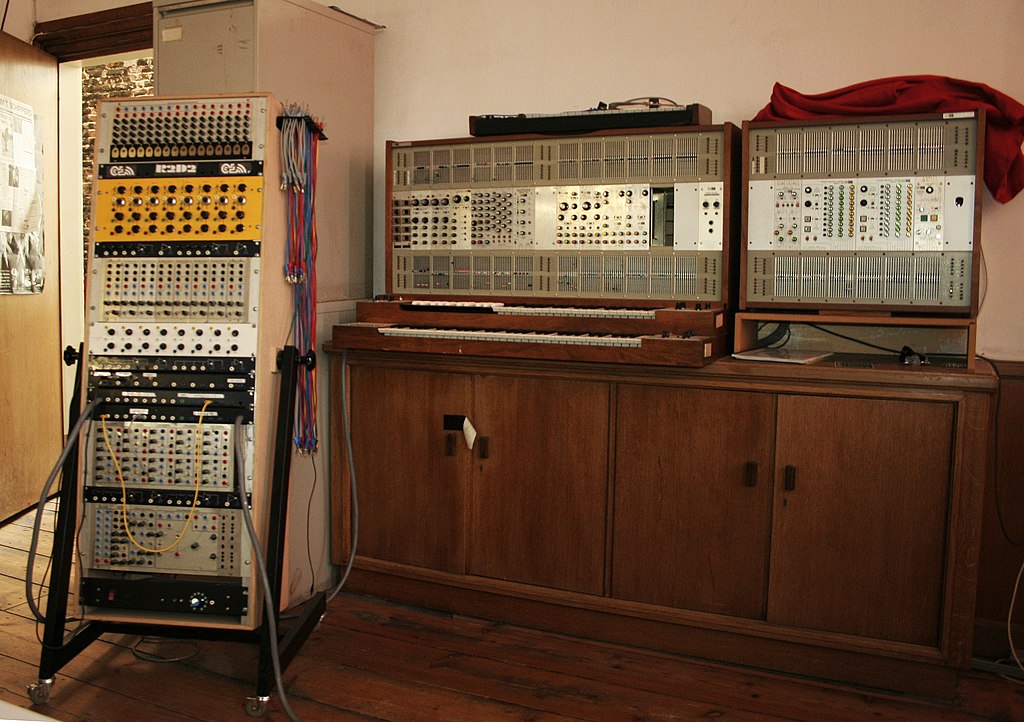
The Arp 2500 Townsend Used in Recording Quadrophenia
Doctor Jimmy Review by poster on Reddit
It would be so easy to say this song is offensive and just barely “acceptable” in its day, but that isn’t giving it justice.
Doctor Jimmy is complicated, repulsive, disgusting, difficult, troublesome, and above all else, meaningful. I played it for a somewhat SJW (social justice warrior) friend, who pondered it awhile and then said “I don’t know what to think about this.” That’s exactly what makes this song so captivating, especially when paired with the album as a whole. At face value it’s a melodic, catchy, offensive rocker that isn’t entirely uncommon for its day (Stray Cat Blues by the Stones comes to mind). But of course, “Jimmy” is meant to be a counterpoint to “Tommy,” who is simplistic, predictable, unreal and mythical. Jimmy is complicated, unresolved, and all too real.
I’ve seen a lot of reviews/fan pieces discussing “Quadrophenia” as a commentary on the four band members, but I couldn’t disagree more. The album is above all else a commentary on the dichotomy between who we feel we are and who we actually are/are perceived to be. I personally believe this can even be heard in the main melodic riff: an exchange between the hectic, reckless guitar riff and the subtle, soothing piano line followed by a guitar riff which blends the two together.
I believe the title to be a reference to the differences between the way we view ourselves, the way others view us, the way others view themselves, and the way we view them. It’s a difficult topic to tackle, but the album and the song do it to perfection.
This theme carries throughout the album: “Bell Boy,” “Punk and the Godfather,” “Is it in my Head” are all obvious examples. And, of course, the obvious Dr. Jekyll/Mr. Hyde reference of Doctor Jimmy and Mr. Jim. This ties in neatly with the overwhelming consensus about the album, that it is a reference to the complicated and violent nature of the band members’ (and others’) lives as young mod men in the 60’s. “Talking about my generation?” Well you have no idea, you just see me for what you want me to be.
_________________________________
This post inspired by a post from Celia Farber on her substack from 2/14/25